
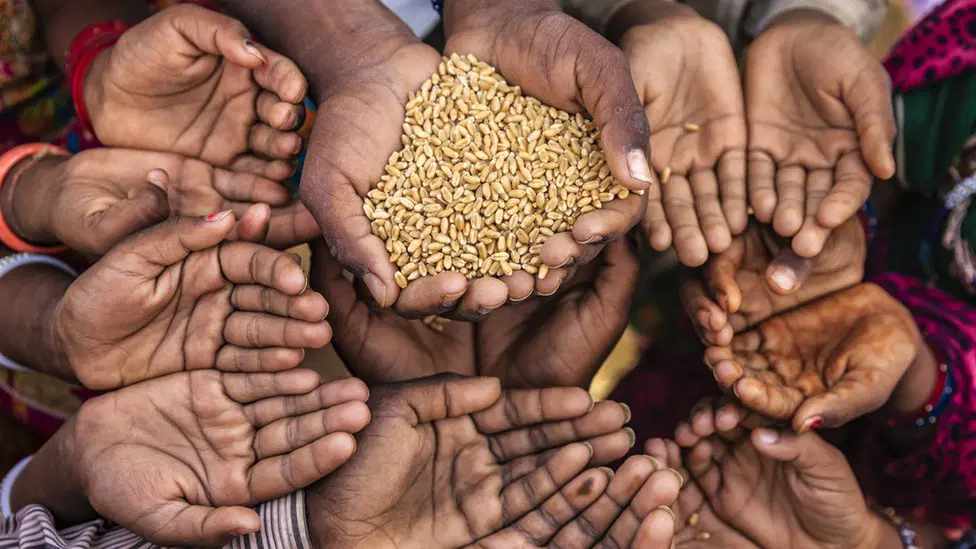
Nigeria and Sudan are among the 10 countries accounting for the majority of the world’s most severe hunger crises, according to the latest Global Report on Food Crises backed by the United Nations.
The report reveals that nearly two-thirds of people facing acute food insecurity globally in 2025 were concentrated in just 10 countries, with a significant proportion in Nigeria, Sudan, and the Democratic Republic of the Congo.
Other countries listed among the worst-hit include Afghanistan, Bangladesh, Myanmar, Pakistan, South Sudan, Syria, and Yemen.
Conflict remains the leading driver of hunger, the report notes, compounded by climate shocks and economic instability. Despite modest improvements in some regions such as Bangladesh and Syria, worsening conditions in countries like Afghanistan, DR Congo, Myanmar, and Zimbabwe have offset gains.
In a grim milestone, the report confirmed famine conditions in two separate locations—Gaza Strip and parts of Sudan—within the same year, highlighting the escalating severity of global food insecurity.
Overall, about 266 million people across 47 countries experienced acute food insecurity last year—almost double the figure recorded in 2016—underscoring a rapidly deteriorating global situation.
The report also raised concerns over declining international aid and warned that ongoing tensions in the Middle East could further strain food systems. Disruptions to key supply routes, including the Strait of Hormuz, have driven up energy and fertiliser costs, increasing pressure on food production.
Alvaro Lario, head of the International Fund for Agricultural Development, cautioned that rising input costs during planting seasons could significantly impact agricultural output in vulnerable regions.
He called for increased investment in smallholder farmers, particularly in climate-resilient crops and local fertiliser production, as part of efforts to strengthen food systems and improve long-term sustainability.
The report paints a bleak outlook for 2026, warning that without urgent intervention, conflicts, economic shocks, and climate extremes will continue to drive hunger levels higher worldwide.