
The days of purchasing asoebi in the expectation of receiving a gift in return are long gone. That arrangement has been destroyed by the poor economy.
It is implied that the main owambes in the town would start to become scarce, and the hosts’ earnings might start to decline.
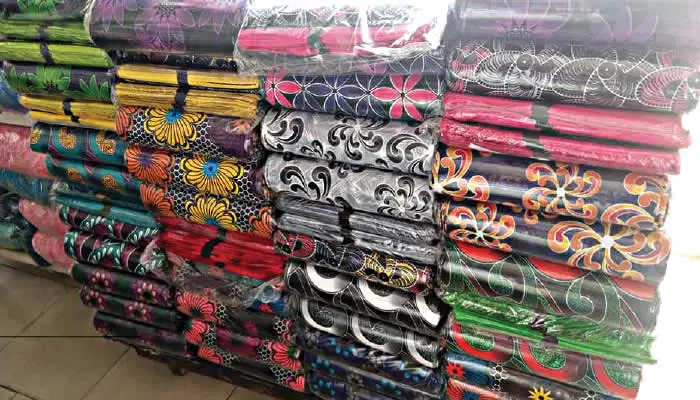
Owambe hosts typically purchase vast quantities of clothing, primarily native fabrics known as ankara or lace materials, as needed, mark it up, and give it to friends, family, and other well-wishers who are eager to attend their parties.
Using the clothing to identify guests at that specific event is one of the motivations behind this gesture, and another is to raise money.
Those that purchased asoebi from the host are typically given some nice presents as a token of appreciation at the conclusion of the event.
However, Economy&Lifestyle has found that Owanbe hosts hardly make back half of their expenses, let alone have enough money to provide gifts, as a result of the poor economy.
Owambeis is a Yoruba slang term used to describe a big, extravagant celebration that is hosted by one or more hosts.
These events include weddings, funerals, and housewarming celebrations where guests flaunt their pricey shoes, purses, jewelry, and other fashionable goods.
According to Economy&Lifestyle, Oluwarantimi Durojaiye, a fish vendor in Lagos who is getting ready for her late father’s funeral, is charging N5,000 for six yards of Asoebi without including any gifts to entice customers.
She mentioned that in order to make the occasion spectacular, she had to sell the Asoebi because plastics and other gift items are pricey.
“This month, I’m throwing a party to commemorate my father’s last funeral,” she remarked. For six yards, I went with an asoebi that cost N5,000. I don’t have the luxury to attach a present for its patronage because I can’t afford it.
“Ankara material can be purchased for as little as N4500 if you wish to purchase less and of higher quality. I’ll take a bus to make my purchases in bulk. Some will even purchase it on credit. Therefore, there is nothing left to buy as gifts.
I’ve been to parties when I purchased asoebi and received no gratitude for it. After just a few amala and beef wraps, I headed home.
Even if they purchase your asoebi, people don’t go to parties these days. They see purchasing asoebi as an alternative to going to your celebration. Additionally, it saves them money for transportation and for dousing the host with water while dancing.
Even if you have the possibility of receiving something from such a source after using your money to purchase gifts for the people who purchased your asoebi, there are very few people who will waste your money.
Finally, you will open your mouth to the world when you have spent all of your money.
An craftsman named Awolade Sulieman claimed that after attending more than four parties this year, he has not received any gifts or souvenirs for purchasing the Asoebi. He pointed out that since no one is concerned about what to purchase Asoebi buyers, the custom of other family members of the party hosts contributing mementos has also gone away.
He pointed out that their sole concerns are food and beverages, which has also become scarce during gatherings.
“I’ve gone to more than four parties this year and bought Asoebi with them,” he remarked. Never once have I received gifts with the materials I purchased. N15,000 was the most I ever paid for these Asoebi. I only spent N5,000 on Asoebi, which is a cap material.
“Even hosts’ family who typically exchange gifts don’t do that again.
They only care about providing meals for their visitors, and occasionally this is insufficient.
“Most people only purchase the asoebi as an option to skipping the party, thus very few show their appreciation by throwing money at the hosts while they dance. They are aware that attending these celebrations will cost more than purchasing the asoebi.
In fact, a friend of mine who attended her mother’s last funeral informed me unequivocally that she has instructed people who purchased her asoebi to sew it so that she won’t be embarrassed and won’t be treated as she should.
The South West Nigerians, particularly those living in the cities, had a strong custom of tying gifts to Asoebi patronage.
They were the first to use Asoebi for gatherings.