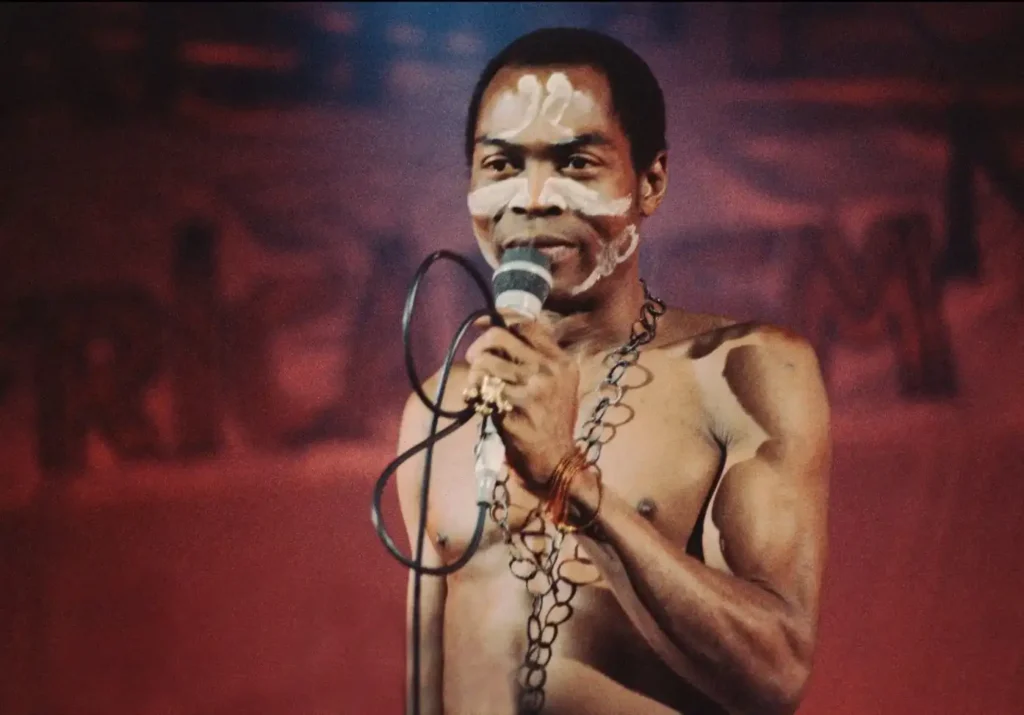
More than a quarter of a century after his passing, Fela Anikulapo Kuti remains the towering shadow under which the entire Afrobeat (and Afrobeats) universe dances. Artists who weren’t yet born when he took his final bow still reach for his legacy — not just in sound, but in spirit, conviction, and ambition.
In smoky clubs, crowded studios, rooftop concerts, and global festivals, there’s a collective unspoken prayer: “May I inherit even a fraction of Fela’s fire.”
But why? What is it that makes Fela more than a legend — a benchmark, a myth, a cultural compass even for youngest musicians?
Because Fela didn’t just make music. He built a movement.
The Sound That Shook the World: A Masterclass in Afrobeat
When Fela started shaping what became known as Afrobeat, he didn’t just borrow pieces from existing genres — he exploded them into something audaciously new.
His sound fused jazz, funk, traditional highlife, Yoruba chants, psychedelia, and soul into extended compositions that pulsated with complexity, groove, and raw African pride.
That signature — call-and-response vocals, horn arrangements, Yoruba rhythms, polyrhythmic grooves — is still the gold standard.
For many modern artists, referencing that sound is like checking their musical DNA. It’s a stamp of authenticity, of respect for roots, of artistic pedigree.
Even as music technology evolves — Auto-Tune, digital production, streaming-optimized beats — the core Afrobeat template remains a beacon. Songs anchored in Fela’s rhythmic legacy still feel fresh, vital, and powerfully African.
More Than Groove: Afrobeat as Protest, Conscience, Identity
Fela’s genius didn’t end at rhythms. He turned his music into sharp instruments of protest — challenging government corruption, inequality, societal hypocrisy, neocolonialism.
Through his lyrics and activism he gave voice to the voiceless and demanded dignity for the oppressed.
For modern Afrobeat or Afrobeats artists — many navigating similar social, economic, and political realities — Fela’s legacy offers more than musical inspiration: it offers a role model.
A blueprint for how art can be entertainment and conscience — a vehicle for social commentary without sacrificing rhythm or danceability.
This duality — groove + guts — remains magnetic. Artists who crave both relevance and respect understand why Fela’s name still resounds.
Cultural Roots and Global Reach: Pride in Identity, Power in Influence
When Fela broke boundaries, he didn’t just define a new sound — he redefined African music culture.
He showed that African rhythms, language, and worldview could stand as high-fidelity art, not diluted by western influence but enriched by African identity.
Today’s Afrobeat and Afrobeats artists walk that path. They combine local flavour with global appeal.
They rap in African languages, sing about African stories, dance African dances — yet headline international festivals and collaborate with global stars.
To many, being “the next Fela” means being both African and global. It means carrying a torch that projects the continent’s cultural pride onto the world stage.
Why the “Fela Dream” Is Still Alive
* A foundation of sound: Fela created a musical language — Afrobeat — that remains relevant and rich. Its structure, feel, and instrumentation are an evergreen canvas.
* A blueprint for rebellion: Through lyrics and lifestyle, Fela proved music can challenge power. His fearless stance inspires artists who refuse to be just entertainers.
* Cultural reclaiming: For African artists, following Fela is reclaiming heritage — telling stories through African rhythms and languages, with dignity.
* Global export potential: Afrobeat’s mix of African soul and universal groove makes it clickable worldwide. Artists see in Fela a path to local relevance and global stardom.
* An impossible standard — and that’s the point: To aim for Fela is to aim high. It forces artists to reach beyond cheap hooks and fleeting trends. It demands substance, depth, musicality, guts.
But It’s Not Easy — The Burden Of A Legend
Emulating Fela isn’t just about copying horns or drums. It means commitment. Long tracks. Socio-political courage. Artistic integrity in a clime of commercial pressure.
Streaming platforms, hit-song formulas, industry demands for singles over albums — these push against the Fela ideal.
Young artists struggle between what sells and what they believe in. Yet the “Fela dream” persists — and often pushes them to break rules, take risks, stay real.
The New Wave: Evolving the Legacy, Not Repeating It
The reverence for Fela doesn’t always mean duplication. Many modern acts — in Nigeria and around the world — reinterpret Afrobeat.
They infuse it with dancehall, hip-hop, electronic sounds, reggae, alté vibes.
But the DNA remains: rhythm, social consciousness, African identity, soul.
Some rediscover the long-form Afrobeat tracks, others sample, others reinvent. But all of them keep looking back — not to copy, but to draw strength.
Because for them, Fela isn’t just a legend. He’s a foundation.
Fela Lives — In Every Drum, Every Sax, Every Voice That Dares
More than 28 years after his death, Fela Anikulapo Kuti remains more than memory. He is legacy. Template. Challenge. Inspiration.
For every Afrobeat artist today — whether in Lagos, London, New York, or Johannesburg — the dream is the same: to channel that energy, that spirit, that unapologetic voice.
Also Read: “I Become a Beast”: Osimhen Opens Up on Rituals and the Pain of Losing
Because to be “the next Fela” is not about replacing him. It’s about honoring him — by pushing Afrobeat into tomorrow. By reminding the world that African music isn’t a footnote, but a heartbeat. And by daring to ask: What can we do next?
If you follow this path, if you carry this vision — you might never become Fela. But you might become something better: your own legend.