
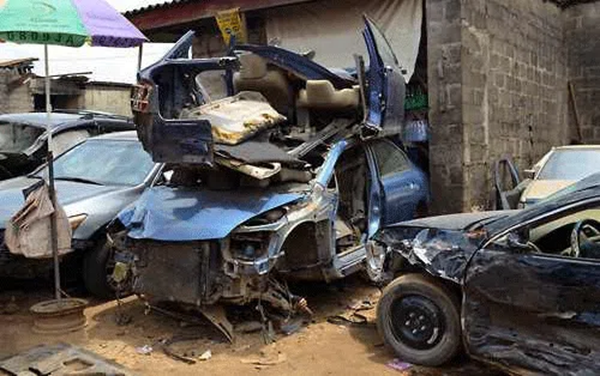
If you live in Nigeria, chances are you’ve seen it countless times — a broken-down car abandoned by the roadside, tyres stripped, bonnet rusting, weeds growing through the engine bay. From Lagos highways to rural roads in Enugu, Kano, Ibadan and Port Harcourt, end-of-life vehicles have quietly become part of our landscape.
Until now.
From 2026, the Federal Government is preparing to flip the script. What was once an eyesore, a safety risk and an environmental headache is about to become a regulated industry worth over ₦150 billion every year. At the centre of this shift is a mandatory vehicle recycling fee that Nigerians will pay when buying or registering vehicles.
Officials say the move will clean up the environment, create thousands of jobs, stop Nigeria from being a dumping ground for dead cars — and fundamentally change how the auto sector works.
Here’s a clear, down-to-earth breakdown of what this new policy really means for everyday Nigerians.
1. The recycling fee officially starts in 2026
Beginning in 2026, anyone registering a vehicle in Nigeria — whether brand new or fairly used — will pay a mandatory recycling fee. It will be collected at the point of registration, not years later.
2. It’s backed by a government-approved ELV policy
The fee is part of the End-of-Life Vehicle (ELV) programme, a policy already approved by the Federal Government to manage how old, broken and unsafe vehicles are handled.
3. FG expects over ₦150bn every year
By formalising vehicle recycling, the government estimates annual revenues of more than ₦150 billion, money that currently slips through the cracks of the informal economy.
4. The money isn’t just for revenue
Officials insist the fee will fund:
* Proper vehicle dismantling
* Safe recycling of metals and components
* Environmentally responsible disposal of unusable parts
In short, fewer dead cars rotting on Nigerian roads.
5. Nigeria is copying what works abroad
In countries across Europe and parts of Asia, vehicle buyers pay upfront for disposal long before their car breaks down. Nigeria is simply adopting a system that already works globally.
6. Expect complaints — at first
Government officials admit Nigerians may resist the idea initially. But they argue it’s better to pay a small fee upfront than live with environmental damage, unsafe roads and abandoned wrecks everywhere.
7. Most “old cars” aren’t useless
Studies show that over 85% of parts from end-of-life vehicles can still be reused or recycled — engines, doors, electronics, metals and more.
8. Belgian parts market won’t disappear — it will evolve
The popular “Belgian parts” market isn’t going anywhere. Instead, it will be better regulated, safer and more organised, allowing traders to operate within a formal recycling system.
9. Thousands of new jobs are expected
The recycling value chain will open doors for:
* Mechanics
* Dismantlers
* Welders
* Transporters
* Spare parts dealers
* Logistics operators
For many young Nigerians, it could become a new source of livelihood.
10. Nigeria is importing more cars again
Vehicle imports bounced back strongly in 2025, hitting about ₦1.01 trillion in just nine months — a sign that demand is rising as forex conditions improve.
11. Tokunbo cars still rule
Despite rising costs, fairly used vehicles remain the backbone of Nigeria’s auto market, driven by affordability and durability concerns.
12. Dead cars from abroad will soon be blocked
From 2026, all used vehicles coming into Nigeria must pass pre-export certification before leaving their country of origin.
13. Foreign exporters will pay — not Nigerians
The cost of certification will be borne by exporters, shutting down the practice of dumping rusted, unroadworthy vehicles in Nigeria for quick profit.
14. Nigeria has been an easy target
Because Nigeria lacked strict import checks, it became a favourite destination for exporters looking to offload end-of-life vehicles. That loophole is about to close.
15. Petrol and diesel won’t be the only options
The reforms also push for converting vehicles to:
* Electric Vehicles (EVs)
* Compressed Natural Gas (CNG)
This aligns with Nigeria’s long-term energy and climate goals.
16. Mechanics and regulators are already being trained
The NADDC has started nationwide training on EV maintenance, vehicle conversion and CNG retrofitting to prepare the workforce.
17. Official EV and CNG certifications arrive in 2026
Structured certification programmes and national standards will be rolled out to ensure safety and professionalism.
18. Nigerian-made vehicles are quietly emerging
Universities and local engineers are already developing:
* Tricycles
* Buses
* Electric campus shuttle vehicles
Proof that local innovation is gaining momentum.
19. Parts, not cars, drain Nigeria’s money
Nigeria spends more importing tyres, batteries, brake pads and filters than complete vehicles — which is why component manufacturing is now a major focus.
20. Auto policy may soon become law
Plans are underway to turn the National Automotive Industry Development Plan into an Act of Parliament, giving investors stronger legal backing.
21. Why 2026 really matters
Government officials describe 2026 as the year Nigeria’s auto industry finally changes direction — from chaos to structure, from waste to value, and from import dependence to industrial growth.
The Bottom Line
That abandoned car by the roadside? Under the new system, it won’t just rot away. It could become spare parts, raw materials, jobs — and revenue.
Also Read: FG Moves to Formalise Vehicle Recycling, Introduces New Auto Import Rules
Love it or hate it, the vehicle recycling fee is coming. And by 2026, Nigeria’s roads — and auto industry — may never look the same again.