For decades, the Third Mainland Bridge has been more than concrete and steel. It is Lagos in motion — chaotic, relentless, unpredictable. Every morning and night, hundreds of thousands of lives pass through it, often at terrifying speeds, with little oversight and even less accountability.
Now, that era may be ending.
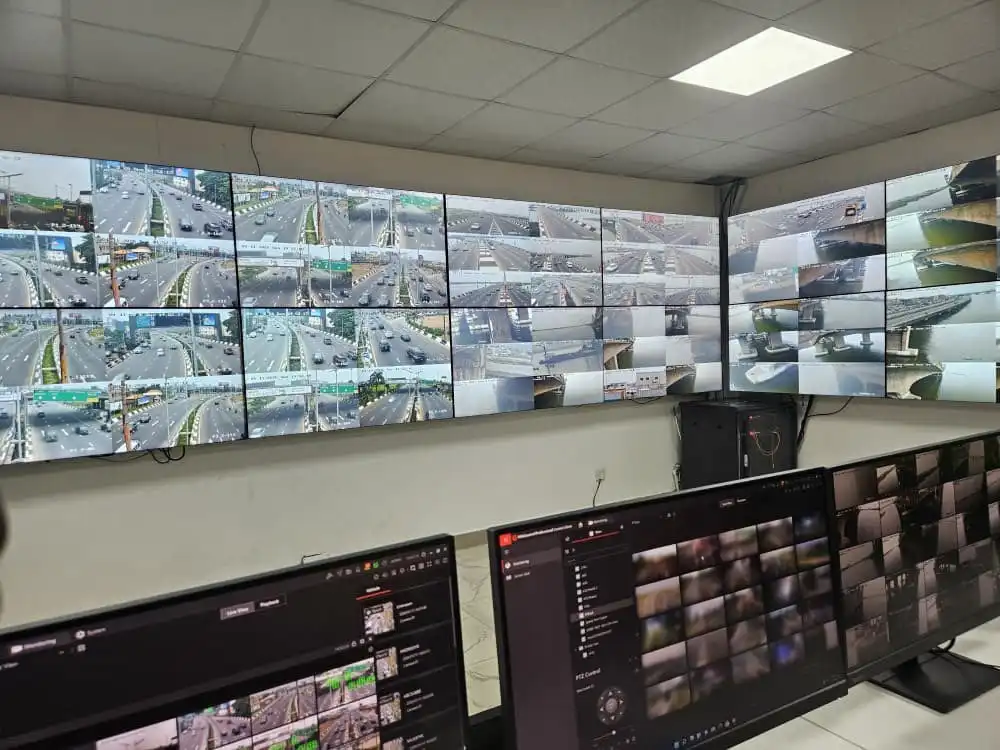
With the Federal Government’s official launch of a ₦40 billion high-tech CCTV control centre, the Third Mainland Bridge has entered a new chapter — one that promises safety, order, and surveillance on a scale Nigeria has never seen before.
Supporters say it’s a long-overdue leap into modern infrastructure. Critics whisper words like “Big Brother”, “waste of money”, and “selective enforcement.”
But love it or hate it, one thing is clear: life on the Third Mainland Bridge is about to change.
Here are five major benefits Lagosians should expect — and why they matter more than we think.
1. Reckless Driving Finally Has Witnesses
For years, the bridge has doubled as an unofficial racetrack. Speed limits are ignored, dangerous overtaking is routine, and accidents are often blamed on “mysterious circumstances.”
That excuse is gone.
With real-time CCTV coverage, every reckless driver now has an audience — and potentially, evidence against them. Speeding, dangerous lane changes, and hit-and-run incidents can now be tracked, recorded, and acted upon.
This is not just about punishment. It’s about deterrence.
When drivers know they are being watched, behavior changes. And on a bridge where one mistake can kill dozens, that alone could save countless lives.
2. Suicide Attempts Can Be Stopped Before It’s Too Late
This is the benefit few people like to talk about — but it may be the most important.
The Third Mainland Bridge has quietly become one of Nigeria’s most notorious suicide spots. Too often, tragedies unfold unseen until it’s too late.
The new control centre allows security agencies to spot distress signals early — loitering, strange movements, or attempts to climb barriers — and intervene immediately using patrol teams and surveillance boats.
This is not about policing emotions. It’s about giving people a second chance at life.
For a city battling mental health stigma, this silent intervention could become one of the project’s greatest legacies.
3. Traffic Chaos Will No Longer Be a Mystery
Every Lagosian knows the frustration:
You enter the bridge smoothly… then suddenly, everything stops. No accident. No visible cause. Just gridlock.
Now, traffic managers can see problems as they happen — broken-down vehicles, minor collisions, flooding, or suspicious activity — and respond instantly.
With live feeds, patrol vans, and coordinated response units, delays can be resolved faster, and diversions can be planned intelligently.
4. Infrastructure Failure Won’t Catch Us Unaware Again
One of the most shocking revelations from the Minister of Works was this: serious deterioration existed above and below the waterline before the current rehabilitation.
In plain terms, disaster was lurking — unseen.
The new surveillance system doesn’t just watch cars and people; it monitors structural integrity, including underwater components.
Early warning signs can now be detected before they turn into catastrophic failures.
For a bridge that carries the economic heartbeat of Lagos, this alone justifies the investment.
Because the real cost is not ₦40 billion —
it’s the price of collapse.
5. A Test Case for Nigeria’s Future — or Another Elite Project?
Here’s where the controversy deepens.
No other bridge in Nigeria has this level of surveillance. Not in Abuja. Not in Port Harcourt. Not in the East or North.
Is the Third Mainland Bridge a pilot project for nationwide modernization, or just another example of Lagos-centric development?
If it works — really works — Lagosians may be the first beneficiaries of a smarter, safer Nigeria.
If it fails, critics will say ₦40 billion went into screens, generators, and solar panels while other roads crumble.
The bridge has become more than infrastructure.
It’s a national experiment.
Watched, But Safer?
The Third Mainland Bridge CCTV project raises uncomfortable questions about surveillance, governance, and trust. But it also offers something Lagos desperately needs: order in the middle of chaos.
Also Read: FG Commissions ₦40bn CCTV Control Centre for Third Mainland Bridge
Whether this becomes a life-saving innovation or a symbol of wasted potential depends on one thing — how seriously it is managed and enforced.
For now, Lagosians should know this:
The bridge is watching.
And for the first time in a long time, it might actually be watching for you.