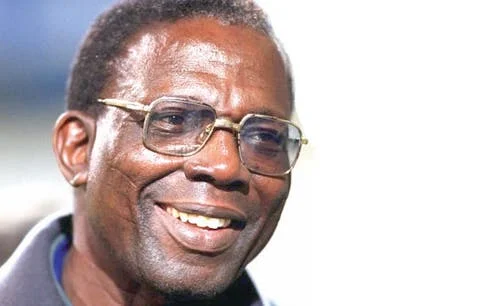
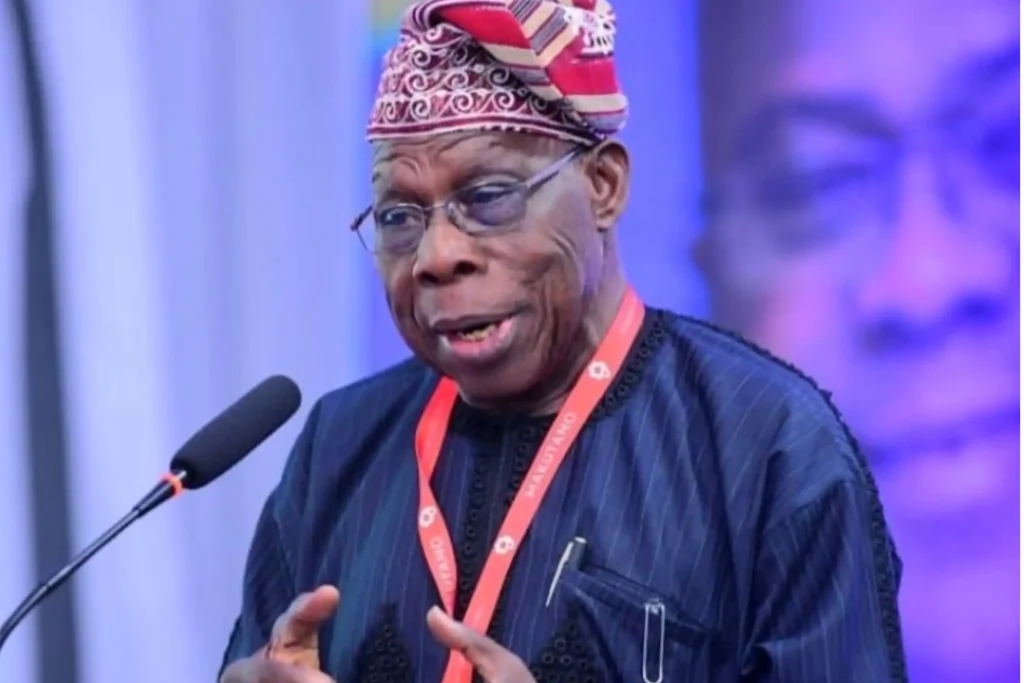
Former President Olusegun Obasanjo has once again stated that he remains uncertain about his true age, joking that he can only estimate it by comparing himself with classmates who are still alive.
Obasanjo made the remark on Sunday, December 7, during an edition of the Toyin Falola Interviews, a conversation series hosted by renowned historian Professor Toyin Falola.
The session also featured Bishop Matthew Kukah of the Sokoto Catholic Diocese and former presidential candidate, Professor Kingsley Moghalu.
The former President, who has repeatedly spoken about the mystery surrounding his birth date, said the only benchmark he has are former schoolmates whose ages are known.
“I can’t tell you my exact age,” he said. “But I gauge it from those I attended school with. For instance, the Olubara of Ibara, Oba Jacob Olufemi Omolade, is still alive. I know at least six of my secondary school classmates who are alive today — and none of them is under 90. So you can guess my age from that.”
Why I Created the Presidential Library — Obasanjo
Obasanjo also used the forum to shed light on the inspiration behind the Olusegun Obasanjo Presidential Library (OOPL), saying the institution was established to safeguard Nigeria’s historical memory.
He described poor record-keeping as one of the country’s chronic weaknesses, noting that he created the library to prevent important documents and artifacts from disappearing.
“We have already digitalised over three million materials, and another three million are awaiting digitalisation,” he said. “The idea is to preserve the past, document the present, and ensure these records inspire future generations.”
The former President revealed that the library houses an extensive collection of items from various stages of his life — from childhood to his years in public office.
“My primary school record card is there,” he said. “So are my secondary school files, manuscripts of books I wrote — even the ones I wrote in prison. We’ve kept everything, including crops of maize I planted during my incarceration.”
He added that the archive also includes deeply personal materials, such as a letter he wrote to General Sani Abacha after losing his son in an accident, and another letter written to his wife while he was in prison.
Also Read: Details Emerge On How Nigeria Military Stopped Coup In Benin Republic
Obasanjo maintained that the Presidential Library was his attempt to correct a national flaw.
“One of our biggest failings in this society is that we don’t keep records. Institutional memory is always weak. The library is my way of addressing that,” he said.