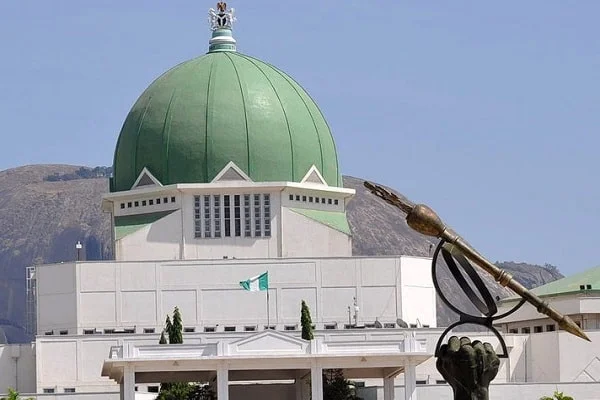
In a decisive move to address revenue shortfalls, weak capital spending, and overlapping budget cycles, Nigeria’s National Assembly on Tuesday approved a comprehensive fiscal reset. Lawmakers endorsed a revised ₦43.56 trillion 2024 Appropriation Act and a reworked ₦48.32 trillion budget framework for 2025, extending the fiscal year to March 31, 2026.
The approval followed extensive plenary sessions in both chambers, culminating in the passage of the Appropriation Act (Repeal and Re‑enactment) Bills for 2024 and 2025, which had been transmitted to the legislature by President Bola Ahmed Tinubu last Friday.
At the Senate, the revised budgets were approved after the adoption of a consolidated report from the Committee on Appropriations, presented by its chairman, Senator Solomon Adeola (Ogun West). Lawmakers explained that the exercise aimed to align Nigeria’s budgeting system with current fiscal realities, close implementation gaps, and restore discipline to the process.
Senator Adeola highlighted that the previous ₦35.005 trillion 2024 budget was repealed and replaced with a new ₦43.561 trillion framework. The revision includes statutory transfers, debt servicing, recurrent expenditure, and capital spending, with an additional ₦8.5 trillion allocated to capital projects aimed at addressing security, humanitarian, and economic challenges.
“The revised budget balances responsiveness to urgent needs with fiscal prudence, ensuring that debt obligations do not compromise oversight or accountability,” Adeola said.
For 2025, the originally approved ₦54.99 trillion budget was scaled down to ₦48.316 trillion. Part of the capital expenditure, totaling ₦6.674 trillion, was deferred to 2026 to enhance execution efficiency and accommodate anticipated revenue inflows. Adeola warned that concurrent budget cycles weaken transparency and accountability, emphasizing that overlapping budgets should be avoided.
The Senate endorsed the repeal and re-enactment of the 2024 Appropriation Act and the revised 2025 budget framework, with implementation set to conclude by March 31, 2026.
Similarly, the House of Representatives passed the revised budgets after adopting the report from its Committee on Appropriations. Following detailed clause-by-clause review, the House approved ₦1.74 trillion for statutory transfers, ₦8.27 trillion for debt servicing, ₦11.26 trillion for recurrent expenditure, and ₦22.27 trillion for capital spending in 2024. For 2025, allocations include ₦3.64 trillion for statutory transfers, ₦14.31 trillion for debt servicing, ₦13.58 trillion for recurrent spending, and ₦16.76 trillion for capital projects.
President Tinubu explained that the revisions were necessary to incorporate previously omitted items and to align capital expenditure with actual revenue and implementation capacity. He emphasized that the new framework sets a realistic capital implementation target of 30 percent.
“The challenges in executing the 2024 capital budget have significantly affected infrastructure delivery,” the President said. “Extending the 2025 budget to March 2026 will give Ministries, Departments, and Agencies sufficient time to access and utilize the allocated capital funds.”
Also Read: Top Nigerian Court Cases of 2025 That Shook the Nation
The President added that the adjustments are part of a broader reform agenda to eliminate structural weaknesses in Nigeria’s budgeting process, particularly the issue of overlapping fiscal years. By streamlining the process, the government aims to improve planning, ensure better coordination of programmes, and deliver more value for public funds.