
In the ever-spinning carousel of Nigerian politics, nothing stays still for long—not loyalty, not alliances, not even the parties that once strutted like giants. And on Tuesday, another tremor rippled through the country’s political landscape.
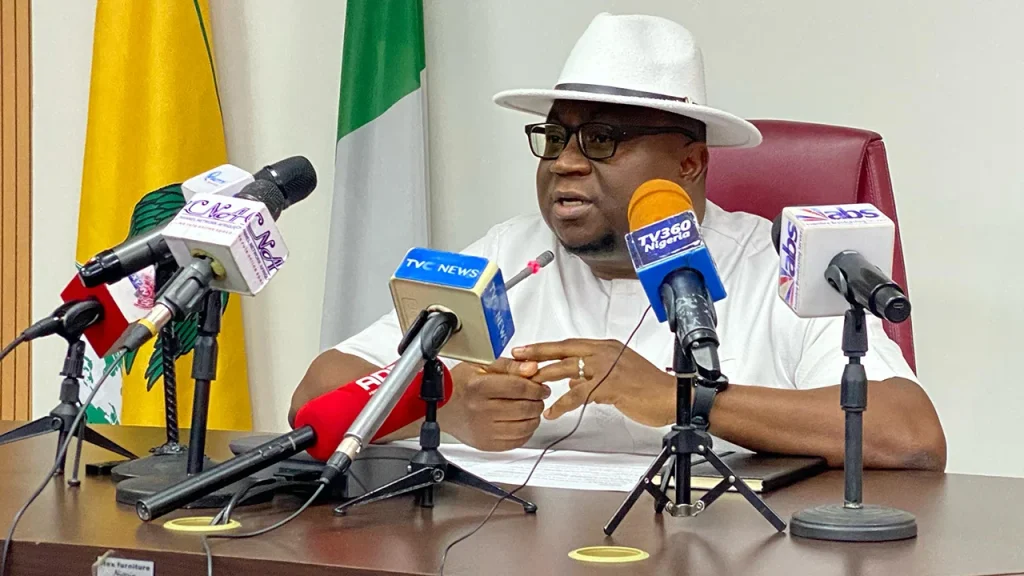
It didn’t come from a campaign ground or a courtroom, but from Government House in Port Harcourt, where Governor Siminalayi Fubara finally made a move many had whispered about, denied, debated, and predicted for months.
Like a man stepping out of a burning building into the open air, Fubara reached for a new political shelter—this time under the umbrella of the All Progressives Congress (APC).
And with that single step, the Peoples Democratic Party (PDP) watched yet another of its biggest political pillars shift to the other side.
For a party already limping through a turbulent 2025, Fubara’s departure wasn’t just a routine defection; it was a loud reminder that the PDP’s political house is shaking at its very foundation.
Fubara Explains Why He Walked Away
Speaking on why he abandoned the party that brought him to power, Governor Fubara didn’t mince words.
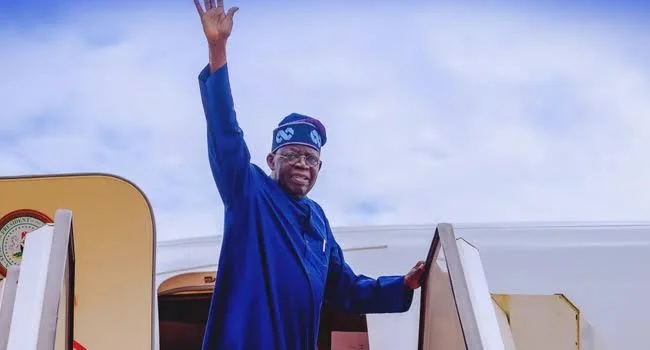
He revealed that his recent visit to the President was more than a courtesy call—it was a turning point.
“I went to see Mr President not just for a personal visit, but for a consultation on state matters,” he said.
“The most important outcome of that meeting is that we now have full support to leave where we were because we didn’t get the protection we needed. The struggles we faced were due to the crisis in the state.”
With striking candor, he added that without President Tinubu’s intervention during Rivers State’s political storm, he might not even be in office today.
“If President Tinubu had not intervened, there wouldn’t be a Siminalayi Fubara today,” he stated.
“Our decision is to move to the APC and fully support the President’s second-term bid.”
And just like that, the governor—once a prized political jewel of the PDP—crossed over to the ruling party.
A Year of Heavy Losses for PDP
Fubara becomes the sixth PDP governor to abandon the party in 2025 alone, in what is quickly becoming the party’s most painful year since its founding.
Before him, five other governors had already jumped ship:
* Peter Mbah (Enugu)
* Umo Eno (Akwa Ibom)
* Sheriff Oborevwori (Delta)
* Douye Diri (Bayelsa)
* Ademola Adeleke (Osun) — who defected, not to the APC, but to the Accord Party ahead of the next governorship election.
Each departure has deepened the cracks within the PDP, leaving many political observers wondering how much more the once-dominant party can take.
More Trouble Ahead?
If insiders are to be believed, the storm is far from over.
Political rumblings suggest that Taraba State Governor Agbu Kefas, Plateau State Governor Caleb Mutfwang, and Zamfara State Governor Dauda Lawal might also exit in 2026.
Should that happen, the PDP’s decline would shift from a worrying trend to a full-blown collapse.
A Party At A Crossroads
In a political season where survival often trumps sentiment, PDP now finds itself trying to hold on to relevance as key players slip away like sand through open fingers.
For Governor Fubara, however, the narrative is different. He paints his move as a decision born from necessity, strategy, and gratitude to a President he says stood by him in his darkest political hour.
Also Read: PDP Warns Against Threats to Democracy Following Siminalayi Fubara’s Defection to APC
For the PDP, it’s another heartbreak in a year filled with bitter farewells.
And for Nigerians watching from the sidelines, it’s one more reminder that in the theatre of power, the script can change in the blink of an eye.