
The Federal Government has unveiled plans to scrap the long-standing Higher National Diploma (HND) dichotomy, announcing a sweeping reform that will allow polytechnics across the country to award degrees.
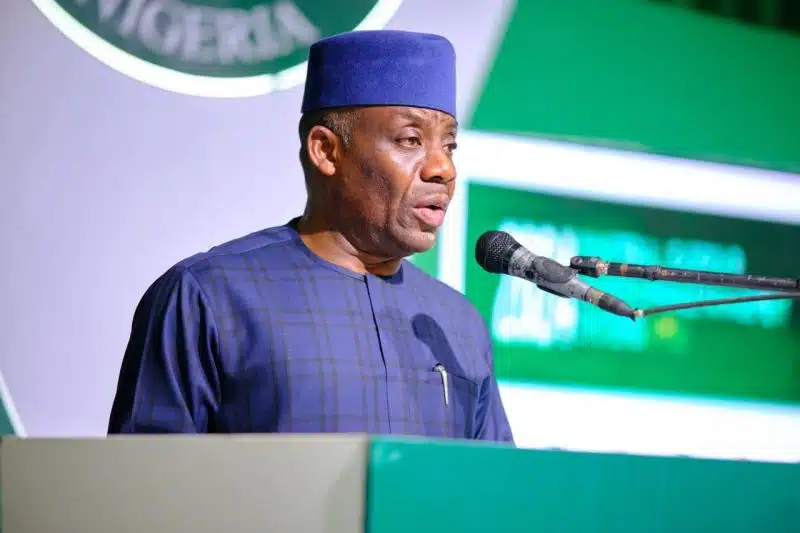
The policy shift was made public on Wednesday in Abuja by the Minister of Education, Tunji Alausa, during a high-level retreat attended by governing council chairmen, education commissioners, rectors, registrars and bursars of polytechnics nationwide.
Describing the decision as historic, Alausa said the reform would finally address decades of systemic discrimination against polytechnic graduates while strengthening the role of technical and vocational education in Nigeria’s development agenda.
He explained that the initiative is designed to reposition polytechnics as top-tier institutions within the higher education ecosystem, without sacrificing their long-established focus on practical, industry-oriented training.
“This is a transformative step that will give polytechnic education the recognition it deserves, while retaining its strong hands-on and skills-based foundation,” the minister said.
According to Alausa, the reform aligns with President Bola Ahmed Tinubu’s Renewed Hope Agenda, which places strong emphasis on employment generation, industrial expansion and human capital development. He noted that for Nigeria to remain competitive globally, the country must develop a workforce capable of innovation, production and problem-solving — a role he said polytechnics are uniquely positioned to play.
With the introduction of degree-awarding status, the minister said polytechnics would be better placed to attract industry collaborations, access improved funding and gain increased public trust. He assured stakeholders that the transition would be carefully managed through clearly defined standards, effective regulation and strong quality assurance frameworks to ensure international relevance and competitiveness.
Speaking on the retreat’s theme, “Transforming Polytechnic Education in Nigeria: Innovation, Good Governance and Sustainability for National Development,” Alausa described polytechnics as the backbone of a skills-driven economy.
He disclosed that the Ministry of Education has placed Technical and Vocational Education and Training (TVET) at the centre of its reform strategy to produce graduates who are industry-ready, innovative and economically productive.
The minister encouraged polytechnic administrators to embed innovation through entrepreneurship hubs, applied research centres and deeper engagement with industry. He identified key growth areas such as renewable energy, agri-technology, digital manufacturing and climate-resilient technologies as priority sectors for research and development.
On institutional management, Alausa stressed that transparency, accountability and ethical leadership must guide the new phase of polytechnic governance. He called for strict financial discipline, timely audits, responsible use of resources and zero tolerance for corruption.
He also highlighted sustainability as a critical goal, urging institutions to expand internally generated revenue through production, services and innovation. According to him, polytechnics should adopt eco-friendly campuses, invest in resilient infrastructure and contribute to national self-reliance by producing goods locally and reducing import dependence.
While acknowledging existing challenges such as inadequate funding, obsolete facilities and societal preference for university degrees, the minister said the benefits of the reform far outweigh the obstacles. He reaffirmed the Federal Government’s commitment to supporting polytechnics through policy changes, infrastructure development and strategic partnerships.
Alausa further announced that a special TETFund intervention has been approved for this year to modernise polytechnic engineering schools with advanced equipment, following a similar upgrade carried out in 12 medical colleges last year.
Urging participants to drive change within their institutions, the minister said the success of the reform depends on visionary leadership and collective action.
“The future of our youth, our economy and our nation rests on the transformation we begin today,” he said.
Also Read: Governor Abba Kabir Yusuf Urged to Follow NNPP Procedures Before Defection in Kano
Education stakeholders at the retreat described the announcement as a game-changer for technical education in Nigeria, predicting that it would boost enrolment, improve staff morale and significantly enhance the contribution of polytechnics to sectors such as manufacturing, technology, agriculture and renewable energy.