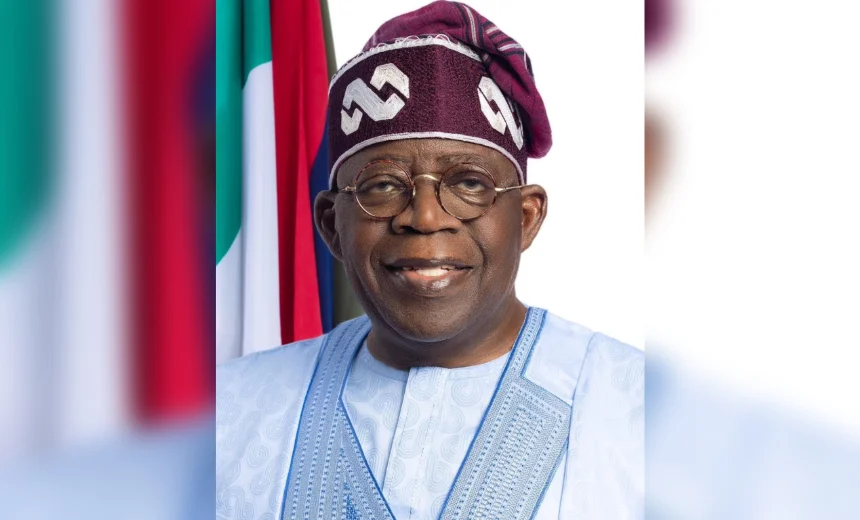
ABUJA — Former Kaduna State Governor and ex–Minister of the Federal Capital Territory, Nasir El-Rufai, has dismissed claims of a personal rift with President Bola Tinubu, insisting that the two were never friends and had no personal relationship.
Speaking during an interview on Trust TV on Monday, El-Rufai said his support for Tinubu’s successful 2023 presidential bid was based strictly on party loyalty and political calculations, not personal affinity.
“I was never Tinubu’s friend. We never had a personal relationship like the one I had with General Buhari of blessed memory,” El-Rufai said.
The former governor explained that his role in Tinubu’s emergence followed consultations within the All Progressives Congress (APC) and broader political considerations ahead of the election.
According to him, his involvement began after he was approached by Islamic stakeholders from the South-West who were keen on producing a Muslim presidential candidate from the region.
“I was approached by certain Islamic stakeholders from the South-West to support the emergence of a South-West Muslim presidential candidate. That is how the discussions started,” he said.
El-Rufai noted that after former President Muhammadu Buhari’s eight-year tenure, power rotation within the APC made a southern presidency inevitable, adding that Tinubu merely benefited from that zoning arrangement.
“As governor of Kaduna and one of the founders of APC, I knew there was an understanding that after eight years of Buhari, power would return to the South. It wasn’t about Tinubu; he was merely an accidental beneficiary,” he stated.
He stressed that once Tinubu emerged as the party’s flagbearer, supporting him became a matter of principle.
“It is a principle of mine to fight for the candidate of my party in every election, whether I like the candidate or not. The fact that he emerged as the party’s candidate meant I would give everything to ensure he won,” El-Rufai said.
However, he disclosed that serious disagreements surfaced after the election, stemming from fundamental differences in governance philosophy and public service values.
“We didn’t fall out; we simply didn’t find areas of agreement. I am in government to serve the public and deliver results, not to enrich myself or appoint cronies,” he said.
El-Rufai was more critical of the current administration’s governing approach, describing it as incompatible with his personal beliefs.
“The philosophy of this government is contrary to everything I’ve been taught as a Muslim, a northerner, and a Nigerian. They came to govern the cake, to enrich themselves. We are different people—parallel lines that will never meet,” he added.
He also revealed that his decision to decline a ministerial appointment offered by President Tinubu was guided by those same convictions.
“If I had accepted the ministerial position that was publicly offered to me, I would have resigned shortly after. Our fundamental philosophies of governance are worlds apart,” El-Rufai said.