Nigerians may soon face increased economic pressure following a fresh surge in the price of cement across the country.
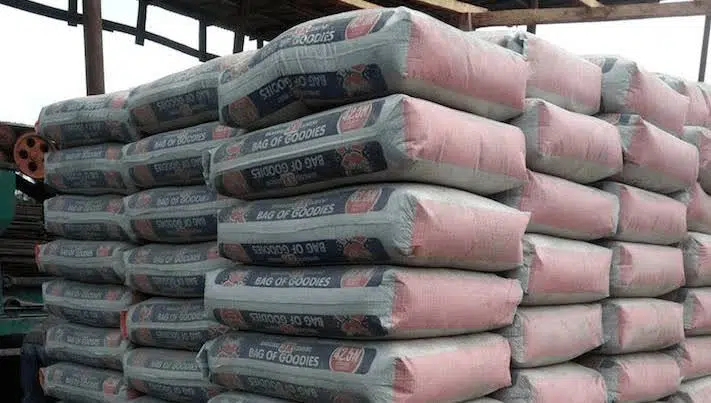
Leading brands such as Dangote Cement and Mangal have reportedly adjusted their prices upward, pushing the cost of a 50kg bag to as much as ₦10,500 in some markets as of January 2026.
This new price reflects a sharp rise from about ₦9,800 recorded in December 2025, representing an increase of roughly ₦1,000 per bag within a single month — a jump of over seven per cent.
Reports indicate that the higher prices are already in effect in Abuja, Nasarawa, Niger State and other regions, with figures varying depending on location and haulage costs.
The development has triggered widespread concern, especially given Nigeria’s vast limestone deposits and cement production hubs in states such as Kogi and Edo.
Many Nigerians are questioning why locally sourced raw materials have not translated into stable or affordable cement prices.
This is particularly striking in light of earlier assurances by industry leaders that cement prices would be capped at around ₦7,000 per bag.
Experts warn that the rising cost of cement could further strain Nigeria’s housing sector, which is already under pressure.
Construction costs continue to climb, while rental prices have surged beyond the reach of many citizens. Findings show that annual rent for self-contained apartments in major cities like Abuja and Lagos has more than doubled, rising from about ₦400,000 to nearly ₦800,000.
Despite the growing burden on households and developers, there has been no clear policy response from the Federal Government.
The situation is unfolding against the backdrop of rising inflation, which increased to 15.15 per cent in December 2025 from 14.45 per cent the previous month, further eroding purchasing power.
Reacting to the price hike, former President of the Real Estate Developers Association of Nigeria (REDAN), Alhaji Aliyu Oroji Wamakko, described the trend as troubling, warning that it could cripple property development and lead to job losses within the construction sector.
According to him, higher cement prices inevitably translate to more expensive housing and rent, while forcing some businesses involved in building and construction to shut down due to rising operational costs.
“This development is very disturbing,” Wamakko said. “The immediate impact is higher construction costs, which then push property prices and rents upward. It also means job losses, as many businesses will no longer be able to sustain operations.”
He recalled that in 2025, major cement manufacturers, including Dangote and BUA, were summoned by the Presidency after cement prices soared to about ₦10,000 per bag.
At the time, the companies reportedly pledged to bring prices down to approximately ₦7,000.
“Those commitments were made after intervention from the presidency,” Wamakko said. “But now, prices are rising again, and no clear explanation has been given.”
Wamakko also expressed concern over what he described as the silence of relevant regulatory agencies, particularly the Price Control Board, which he said should be monitoring sharp increases in essential building materials.
“The Price Control Board exists, but it appears inactive. At this point, no one seems to be addressing the situation,” he said, adding that the lack of oversight has made cement pricing increasingly unpredictable.
He attributed the recent spike to a combination of factors, including rising demand driven by large-scale road construction projects that now rely heavily on cement.
He also pointed to foreign exchange instability and Nigeria’s dependence on imported machinery and chemical inputs used in cement production.
“With more roads being built using cement, demand has gone up significantly,” he explained. “At the same time, currency fluctuations affect the cost of imported equipment and materials needed for production.”
Also Read: Police Arrest Suspect Over Destiny Boy’s Death
Wamakko called for a thorough review of the cement industry’s pricing structure, urging stakeholders and government authorities to investigate the root causes of the persistent increases and develop long-term solutions.
“There needs to be a comprehensive assessment of the entire system,” he said. “Only then can we understand the problem and find a sustainable way forward.”