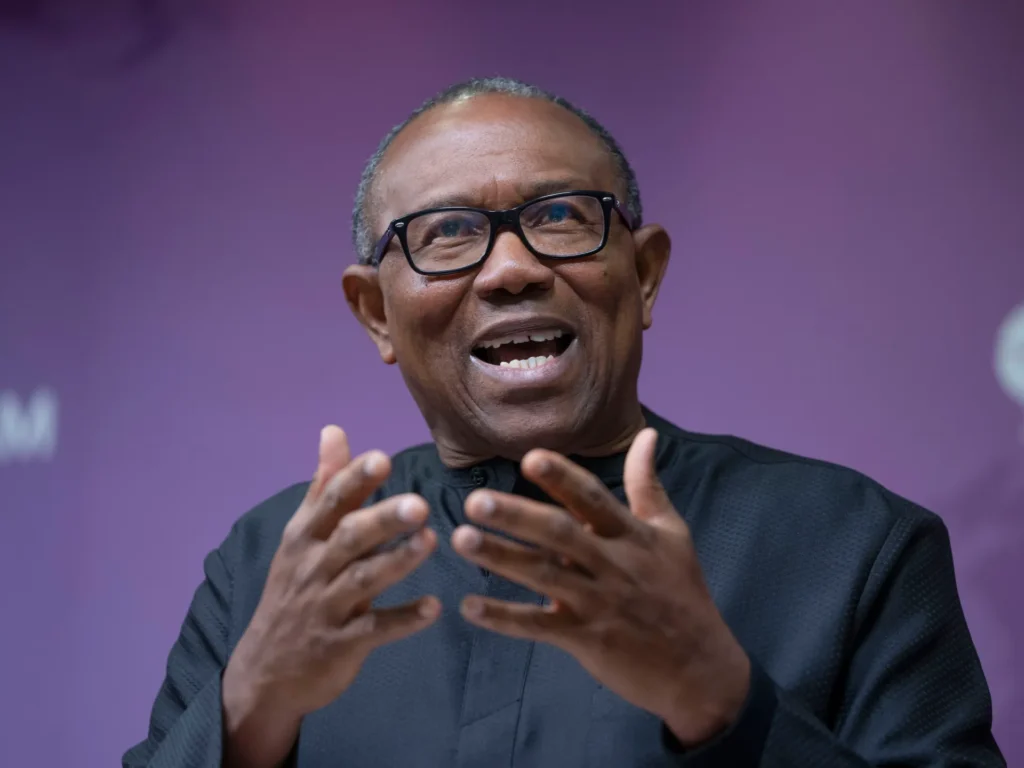
Former presidential hopeful and ex–Anambra State governor, Peter Obi, has called on the Federal Government to halt the rollout of Nigeria’s newly introduced tax law, warning that it is flawed, poorly designed and unfair to citizens already overwhelmed by economic challenges.
In a statement shared on his official X (formerly Twitter) account, Obi expressed deep concern over recent amendments to the tax framework, describing them as confusing and problematic. He revealed that global consulting firm KPMG reportedly uncovered at least 31 critical issues within the new law, including drafting errors, policy contradictions and administrative loopholes.
Obi questioned how such significant defects only became apparent after private discussions between the National Revenue Service and KPMG.
According to him, if trained professionals require behind-the-scenes meetings to interpret the law, it would be unrealistic to expect everyday Nigerians to clearly understand their tax obligations.
The former governor stressed that taxation should not be viewed solely as a revenue-generation tool, but as a social contract built on trust between the government and its people. He argued that this relationship collapses when citizens neither understand the system nor have confidence in those enforcing it.
Drawing comparisons with other countries, Obi noted that effective tax systems are usually supported by visible public benefits such as quality healthcare, improved education, job opportunities, reliable infrastructure and strong social welfare programs. He lamented that in Nigeria, the emphasis appears to be on collecting more taxes without clearly demonstrating how citizens will benefit in return.
Obi also criticised the absence of extensive consultations before the law was finalised. He explained that globally, governments typically engage stakeholders—business owners, labour groups and civil society organisations—over long periods to ensure transparency and public buy-in before implementing major tax reforms. In Nigeria’s case, he said, this step was largely ignored, leaving confusion and uncertainty in its wake.
He further warned that pushing enforcement without consensus or proper communication is especially troubling, given that Nigerians are still grappling with the economic fallout of fuel subsidy removal. According to Obi, many households are struggling with soaring food prices, high transportation costs, shrinking incomes and deepening poverty.
Introducing a broad and inconsistent tax regime under such conditions, he said, reflects weak governance and poor timing. Obi cautioned that taxation imposed without trust feels punitive, while laws lacking clarity only worsen hardship.
Also Read:Â Portable Arraigned in Ogun Court Over Assault, Theft, Resisting Arrest
He urged the government to pause, engage the public meaningfully and build national consensus before proceeding. According to him, sustainable reform can only succeed when it is rooted in transparency, trust and shared benefits. Obi concluded by saying that rebuilding Nigeria through thoughtful and people-centered policies is no longer optional, but an urgent necessity.