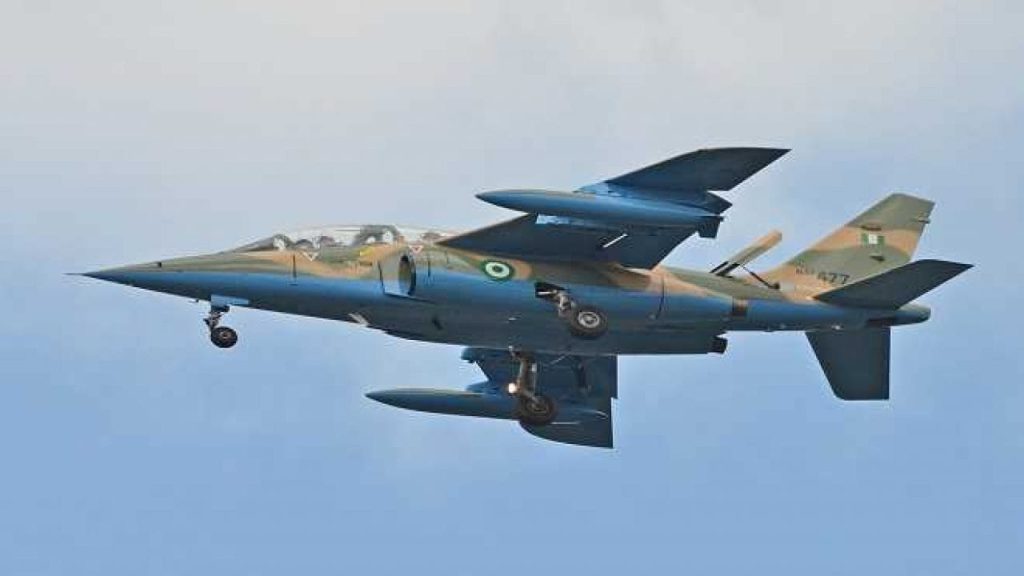
When Nigerian authorities quietly opened the door for U.S. military airstrikes on terrorist targets in the North-West, the decision was framed as strategic, necessary, and inevitable.
Supporters hailed it as proof that Nigeria was finally “getting serious” about terrorism. Critics warned it was a dangerous shortcut.
What was largely missing from the official statements, however, was a sober public conversation about the cost of such foreign military involvement — not in dollars, but in sovereignty, stability, legitimacy, and long-term security.
Inviting a global superpower to carry out airstrikes within your borders is never a neutral act. It reshapes power dynamics, rewrites security doctrines, and leaves consequences that often outlive the bombs themselves.
From Afghanistan to Libya, history offers sobering lessons about what happens when foreign firepower becomes a domestic solution.
As Nigeria celebrates “precision strikes” and “intelligence cooperation,” five troubling disadvantages appear to have been dangerously underestimated — or deliberately ignored.
1. A Silent Erosion of National Sovereignty
While officials insist the strikes were “approved” and “coordinated,” the optics tell a more complicated story.
Once a foreign military begins kinetic operations inside a country, even by invitation, the line between partnership and dependency starts to blur.
Decisions about when, where, and how force is applied increasingly rely on external intelligence, external assets, and external priorities.
Today it is ISIS. Tomorrow, who decides what qualifies as a legitimate target?
The uncomfortable truth is this: no nation that fully controls its security allows another country to drop bombs on its territory — even with consent.
Over time, such arrangements weaken domestic command authority and subtly shift the balance of power away from national institutions.
2. The Dangerous Internationalisation of Nigeria’s Internal Conflicts
Nigeria’s security challenges are complex, deeply local, and rooted in decades of political neglect, economic exclusion, and regional instability.
By introducing U.S. airpower into the equation, those local conflicts risk becoming internationalised.
Once foreign forces are involved, terrorist groups gain a powerful propaganda weapon.
What was once framed as a local grievance can now be marketed as a global jihad against Western interference, attracting foreign fighters, funding, and ideological reinforcement.
In other words, foreign airstrikes can unintentionally upgrade local terrorists into international symbols, prolonging conflicts rather than resolving them.
3. Civilian Fallout and the Limits of “Precision”
Military officials often emphasize “precision strikes” and “minimal collateral damage.” History, however, is far less comforting.
North-West Nigeria is not an empty battlefield. It is a dense patchwork of villages, forests, farms, and displaced communities where militants often live among civilians — sometimes by force, sometimes by necessity.
Even a single miscalculated strike can:
* Kill civilians
* Destroy livelihoods
* Radicalize survivors
* Turn neutral communities into hostile ones
And when the bombs are foreign, accountability becomes murky. Who answers to grieving families? Whose courts hear their complaints? Precision does not erase pain — it only rebrands it.
4. Weakening the Legitimacy of Nigeria’s Own Armed Forces
Perhaps the most dangerous long-term consequence is psychological.
When a government relies on foreign airpower to solve domestic security problems, it sends a damaging signal: our own forces are not enough.
That perception — whether fair or not — chips away at public confidence in national institutions.
Soldiers on the ground may feel sidelined. Citizens may question why billions spent on defense still require external rescue.
Terrorist groups may conclude that Nigeria can be pressured into outsourcing its security.
Over time, this dependency risks transforming Nigeria’s military from a primary defender into a supporting actor in its own country.
5. The Precedent Problem: Once the Door Is Opened
Perhaps the most overlooked danger is precedent.
Today, it is the United States conducting airstrikes. Tomorrow, will other powers demand similar access under the banner of “security cooperation”? What happens when geopolitical rivalries begin playing out on Nigerian soil?
Once a nation normalizes foreign combat operations within its borders, it becomes harder to say no the next time— even when national interests are less clear.
Security decisions made in moments of urgency often outlast the crises that justified them.
Tactical Success, Strategic Uncertainty
There is no denying Nigeria faces a brutal and urgent security crisis.
Terrorist violence must be confronted decisively. But how a nation fights matters just as much as who it fights.
Foreign airstrikes may deliver short-term tactical gains, but they come with long-term strategic risks that cannot be bombed away.
Also Read: US Launches Airstrikes on ISIS Targets in Northwest Nigeria Over Christian Attacks
Sovereignty, legitimacy, civilian trust, and institutional strength are fragile assets — once weakened, they are difficult to rebuild.
The question Nigeria must now confront is not whether the airstrikes were effective.
It is whether, years from now, the country will look back and realize that in seeking quick firepower, it overlooked the slow-burning consequences.