
Nigeria’s Federal Government has revealed that security agencies are collaborating with major social media companies to track down and remove online accounts linked to terrorists and criminal networks that promote violence, spread extremist propaganda, or raise funds.
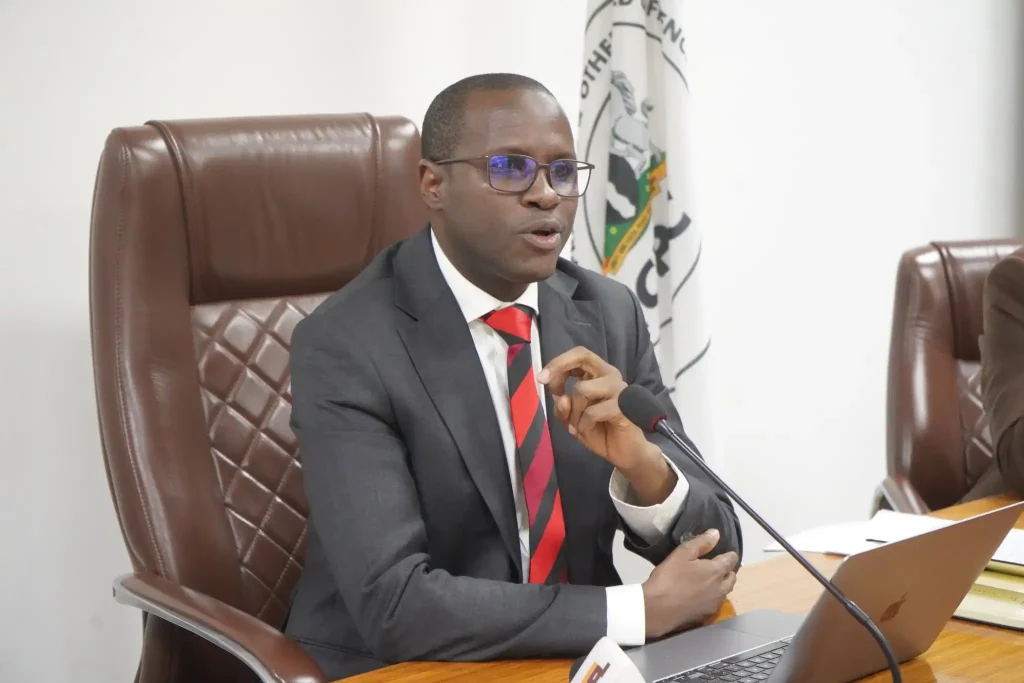
The disclosure was made by the Director-General of the National Counter Terrorism Centre (NCTC), Major-General Adamu Laka, during an end-of-year security briefing in Abuja on Tuesday.
According to Laka, extremist and criminal groups have increasingly relied on popular social media platforms—including TikTok, Facebook, Instagram, Snapchat and X—to publicise their activities, communicate with followers and even flaunt stolen property. He said this growing digital presence prompted sustained engagement between Nigerian security agencies and the companies that own these platforms.
Laka explained that authorities have held multiple meetings with social media firms to highlight content that poses serious threats to national security, leading to the removal of numerous accounts operated by criminal elements.
“These platforms are businesses that want to grow their user base,” he said. “But when we engage them and explain how certain content threatens national security, they understand and take action.”
He recalled a period when bandits openly displayed stolen goods and held live conversations on TikTok, sometimes broadcasting their activities in real time. According to him, such activities have now significantly reduced following coordinated takedowns of the accounts involved.
“There was a time when bandits would openly show their loot online. Some even went live and interacted freely. Those accounts were taken down, and you don’t see that happening anymore,” Laka noted.
Despite these successes, he acknowledged that terrorist groups continue to evolve, often resurfacing under fake names, unverified profiles or alternative digital strategies. He stressed that security agencies are constantly updating their methods to keep pace with these changes.
Ransom Payments and POS Operators Under Scrutiny
Beyond online propaganda, Laka highlighted ransom payments as a major funding source for terrorist and kidnapping networks. He disclosed that criminals increasingly use point-of-sale (POS) operators to receive and move ransom funds, making financial tracking more complex.
In many cases, he explained, ransom payments are transferred into accounts registered to POS operators rather than directly to the kidnappers.
“The kidnappers provide a POS operator’s account number. The money is transferred there, and they simply go to collect it,” he said.
Laka stated that security agencies have stepped up efforts to trace ransom payments, arrest those facilitating the transactions and dismantle terror-financing networks. While he declined to share sensitive operational details, he confirmed that several arrests and prosecutions have already taken place.
He added that authorities have also recovered assets linked to terrorism financing, noting that these actions form part of Nigeria’s commitment to international anti-money laundering and counter-terrorism financing standards. Nigeria’s recent progress in meeting the requirements of the Financial Action Task Force (FATF), he said, was achieved through coordinated efforts involving security agencies, financial intelligence bodies and the judiciary.
Regional Challenges and Future Plans
Laka acknowledged that Nigeria’s security challenges are worsened by porous borders and ongoing instability in parts of the Sahel. He noted that coups in some neighbouring countries have created conditions that allow terrorist groups to operate across borders with greater ease.
“Towards the end of 2023, the security situation was improving,” he said. “But developments in the Sahel made things more difficult because these groups are interconnected across the region.”
He stressed that Nigeria must continue to play a leadership role in tackling insecurity in West Africa and the Sahel, as regional instability inevitably affects the country.
Also Read: Four Nigerian Police Officers Arrested for Defying Presidential VIP Escort Ban
Assuring Nigerians of continued efforts, Laka said security agencies are strengthening both physical and digital counter-terrorism measures and remain committed to staying ahead of evolving threats.
“We are doing our best, and we will not relent,” he said. “By 2026, we are going to significantly raise our game.”