As conversations around Nigeria’s proposed tax reforms intensify ahead of their January 1, 2026 commencement date, anxiety has been rising among citizens.
From market traders and salary earners to digital creators and small business owners, many Nigerians are worried that the new tax regime could mean higher deductions, tighter scrutiny of bank accounts, or new financial burdens.
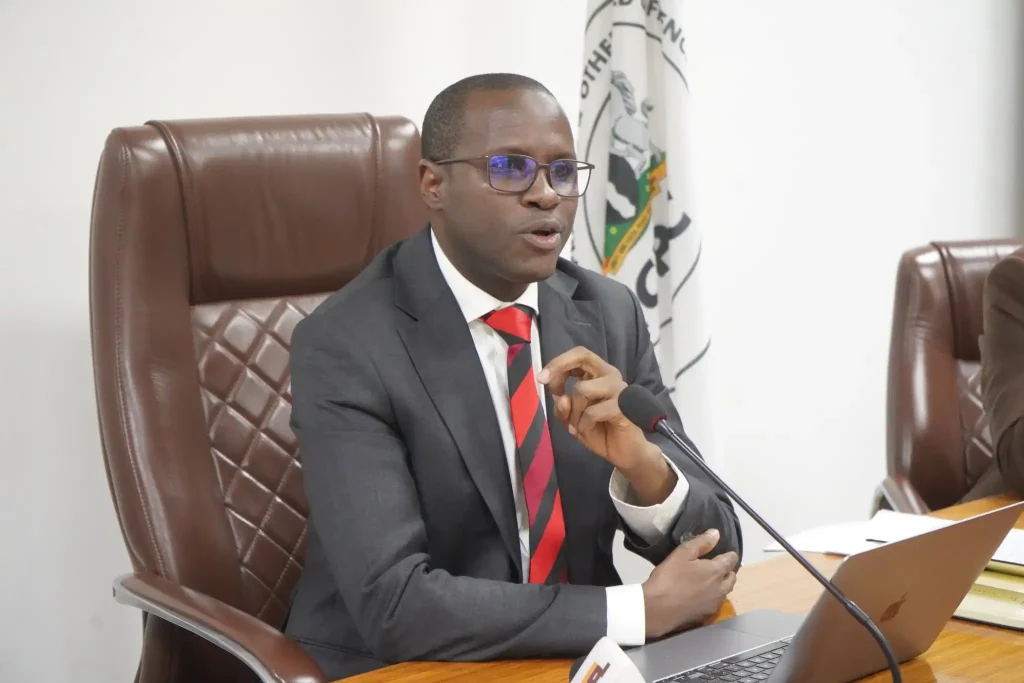
However, the Chairman of the Presidential Committee on Fiscal Policy and Tax Reforms, Mr. Taiwo Oyedele, has moved to calm those fears, insisting that the reforms are not a revenue grab nor an attempt to squeeze struggling citizens.
Instead, he says, the reforms are designed to reset Nigeria’s tax system on the foundation of fairness, transparency, and trust.
Oyedele gave this assurance while speaking at the 2025 Nigeria Media Merit Award (NMMA) ceremony held in Lagos, where he underscored that tax reform is about much more than percentages and projections.
According to him, taxation sits at the heart of the relationship between the government and its people. Nigerians, he noted, are asking legitimate and deeply personal questions: Why should I pay tax? Where does the money go? Is the system fair to everyone, or does it punish only the honest few?
“These are not questions government can answer alone,” Oyedele said. “They require credible, independent and informed media engagement.
Tax policy affects livelihoods directly, which is why it is especially vulnerable to misinformation.”
He stressed that for any tax system to work, it must rest on four key pillars: fair laws, honest administration, voluntary compliance, and active public scrutiny of how tax revenues are spent.
Without trust, he warned, even the best-designed policies will fail.
Reassuring Nigerians, Oyedele maintained that the committee remains committed to reforms that protect low-income earners, broaden the tax net without punishing the vulnerable, and encourage compliance through clarity rather than fear.
To further address widespread concerns, the committee released detailed responses to some of the most frequently asked questions about the Nigeria Tax Act (NTA) 2025, which will take effect in 2026.
Below are the key questions Nigerians are asking — and the official answers.
Key Questions and Answers on the New Tax Law
1. Which individuals does the Nigerian Tax Law apply to?
It applies to all individuals who earn income in Nigeria — workers, traders, content creators, influencers, remote workers — and to Nigerians earning income abroad if they are tax residents in Nigeria.
2. Will transfers and deposits into my bank account be taxed?
No. Moving money through POS, bank transfers, deposits or withdrawals is not a taxable event. Only income earned is taxed.
3. Will the money I keep in my bank account be taxed from 2026?
No. Simply holding money in a bank account is not taxable. Only income such as salary, business profit or interest is taxed.
4. I am a student with no job. Do I pay tax?
No. If you have no taxable income, you won’t pay tax.
5. Will tax authorities monitor bank accounts more closely?
Yes. Authorities will find it easier to track compliance, but bank balances themselves will not be taxed only profits and income.
6. Will I pay tax on loans borrowed from Fairmoney or other lenders?
No. Loans are not income and are therefore not taxable. However, the interest earned by the lender will be taxed.
7. I run a one-man business. Do I pay personal or company income tax?
If registered as a business name (enterprise), you pay Personal Income Tax (PIT). If registered as a limited liability company, you pay Company Income Tax (CIT).
8. If I sell shares and make a profit, will I pay tax?
No, provided the value of shares sold does not exceed ₦150 million and the gain is not above ₦10 million. Gains above this threshold become taxable.
9. I am a pensioner. Will my pension be taxed?
No. Approved pension and retirement benefits remain tax-exempt.
10. Are military salaries taxable?
No. Salaries of military officers are now exempt from tax.
11. Do creatives still enjoy tax exemptions on foreign income?
No. Authors, musicians, sportsmen and other creatives must now pay Nigerian tax on income earned both within and outside Nigeria.
12. Are crypto gains taxable?
Yes. Profits from crypto assets, NFTs and other digital assets are taxable.
13. Who is exempt from Personal Income Tax?
Individuals earning the national minimum wage or less, and those earning below ₦800,000 annually.
14. New Progressive Tax Bands (From 2026)
First ₦800,000 @ 0%
Next ₦2.2 million @ 15%
Next ₦9 million @ 18%
Next ₦13 million @ 21%
Next ₦25 million @ 23%
Above ₦50 million @ 25%
15. Will severance packages be taxed?
Severance pay of ₦50 million or less is tax-free. Any excess above ₦50 million will be taxed using the progressive tax bands.
16. Will Nigeria tax dividends or rent earned abroad?
No. Dividends, interest, rent and royalties earned abroad are exempt if repatriated to Nigeria through approved banking channels.
17. Are disability pensions for injured soldiers taxable?
No. Disability pensions for members of the armed forces are completely tax-exempt.
18. Will agricultural companies be taxed?
No. Agricultural companies engaged in crop production, livestock, forestry, dairy or cocoa processing will enjoy a five-year tax holiday from the commencement of operations.
19. Is income from Federal or State Government bonds taxable?
No. All government bonds are tax-exempt.
20. What is rent relief under the new law?
From 2026, individuals can claim rent relief of 20% of annual rent, capped at ₦500,000. Actual rent must be declared and verified.
21. I earn ₦6 million yearly. Will I be better off?
Under the new law, tax payable drops from ₦896,000 to ₦780,000, resulting in savings of ₦116,000 and higher take-home pay.
22. If my company’s turnover is below ₦50 million, will it pay by tax?
No. Small companies with a turnover below N50 million are exempt.
23. As a remote worker in Nigeria for an international organisation, will I pay tax?
Yes, if your income is exempt in the organisation’s home country under a treaty or diplomatic arrangement.
24. Will a foreigner earning a salary in Nigeria be taxed?
No, if the employer is a start-up or operates in tech or creative industries, and the income is already taxed in the foreigner’s country of residence.
25. Will I be denied access to my bank account if I do not have TIN by January 1?
No. Any person without Tax Identification of Number, TIN, can still have access to its bank account, but will be asked to supply it as time goes on.
However, those who want to open a new bank account without TIN may not be allowed.
Conclusion
In closing, Oyedele reiterated that the 2026 tax reforms are carefully designed to shield low-income earners, promote equity, and encourage voluntary compliance, while laying the groundwork for a tax system that supports economic growth, inclusion, and accountability.
You May Like: Full List Of Countries Stopped By US From Applying For Green Card, Citizenship
For Nigerians seeking clarity rather than confusion, the message from the committee is clear: the reform is not about punishing citizens — it is about rebuilding trust and making the system work for everyone.