The September/October 2022 floods in 34 states of the nation resulted in at least 600 deaths and 1.3 million homeless people, according to government figures, according to the United Nations Children’s Fund.
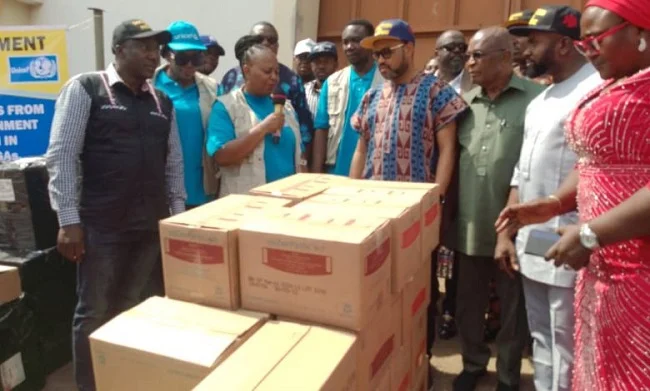
Mrs. Juliet Chiluwe, the Chief of UNICEF Field Office, Enugu, made this statement on Saturday during the formal transfer of supplies from UNICEF to the Anambra State Government for the Anambra State Flood Response.
On this occasion, the first batch of 100 drums of chlorine intended for water source disinfection was delivered. In the presence of his deputy, Dr. Onyekachukwu Ibezim, 320 cartons of Ready to Use Therapeutic Food (RUTF) and 40 cartons of Aquatabs for home water treatment were given to the state governor, Prof. Chukwuma.
During her speech, Chiluwe said, “We extend our best wishes from UNICEF Nigeria to the government and people of Anambra state on the recent flooding incident, particularly to the women and children who were left vulnerable during this time.
“We acknowledged that, since September 2022, 34 of the 36 states in Nigeria have experienced the worst floods in a decade, affecting 2.8 million people—of whom 60% are believed to be children. Government statistics shows that over 600 people have died as a result of flooding, and 1.3 million people have been evacuated.
The risk of waterborne illnesses including cholera, diarrhea, and malaria has increased as a result of the hundreds of public health facilities, water systems, and sanitation facilities that have collapsed due to persistently heavy rainfall.
“UniceF, with funding from the Central Emergency Response Fund (CERF) has initiated a multisectoral response comprising the Health, Child Protection, and WASH sectors to mitigate the impact of the floods and support the early recovery-phase of the affected population in Anambra State,” the speaker continued, “to contribute to the effort of government and other development partners.”
In terms of child protection, the response will concentrate on issues pertaining to protection in three main areas: giving flood-affected children psychosocial support; preventing family separation and reuniting separated and unaccompanied children; and bolstering community-based protection systems against gender-based violence.
“For health, the response will concentrate on emergency primary health care services to address childhood diseases that are vaccine-preventable and waterborne. This will be accomplished by utilizing mobile brigades to ensure that access to health services is maintained, by arranging necessary medications and supplies ahead of time, by assisting in the restoration of basic health services, and by fostering community engagement to improve health-seeking behaviors.
The UNICEF Chief went on, “As part of the response, UNICEF is providing sexual reproductive kits, essential medications and health supplies, and chlorine to disinfect water sources in health centers, schools, and communities.”
Speaking on behalf of the state administration, Dr. Ibezim, the deputy governor, praised UNICEF’s efforts in the state in a number of areas related to human endeavor, particularly those involving women and children.
Ibezim pledged to maintain cooperation with the international organization and stated that the state administration was devising ways to lessen the impact of the flooding on those affected in various regions of the state, in addition to taking preventative action to prevent such situations in the future.